
Fixed-Fee Tax Advisor for Uber Driver
Tax Consultant UK files Self Assessment returns for private hire drivers who work through ride-hailing apps. As a tax advisor for Uber driver earnings, we turn your annual app statement into a return that claims every allowable cost.
Drivers work the airport runs, late-night city centre pickups and weekend event traffic around football grounds and concert venues. The app pays your fares weekly but deducts no tax, so the full bill lands on your own return each January.
Our office is in St James Tower on Charlotte Street, Manchester. Drivers anywhere in the UK send their statements online and speak to us by phone between shifts.

Our Services
Tax Help Built for Ride-Hailing Drivers
Private hire drivers count as self-employed for tax, even though the courts treat them as workers for pay and holiday rights. That means you report your own profit and pay Income Tax and Class 4 National Insurance on it. We handle every step for a fixed fee.

Tax Planning & Tax Advice
We assess your income structure, expenses, and future plans. Our tax advisors identify compliant strategies to manage exposure and improve efficiency. Every recommendation reflects current legislation.

Business Tax Advisory
Running a company brings ongoing tax considerations. We advise on corporation tax, director income, and financial structuring. Our focus remains on helping you manage obligations while maintaining control over your finances.

VAT Tax Advisor
VAT requires careful handling. Our VAT tax advisors assist with VAT registration, selecting the most suitable scheme, and ensuring accurate submissions. We also provide ongoing VAT compliance support to help reduce the risk of errors and penalties.

HMRC Enquiries & Tax Disputes
If HMRC raises questions, prompt action is important. Our tax consultants manage enquiries, compliance checks, and disputes with a clear and structured approach. We handle communication directly and keep you informed throughout the process.
How Drivers Pay Tax on App Earnings
The app pays drivers their fares without taking any tax off. You report the full fares on your return and then deduct your costs, including the service fee the app keeps.
Ride-hailing apps send HMRC every driver’s earnings once a year. The 30-sale exemption in the reporting rules covers goods sellers only, so every active driver’s figures reach HMRC.
Each app also gives you an annual tax summary. It shows gross fares, tips, the service fee and the amount paid to your bank, and it’s the starting point for your return.
HMRC sets out the reporting rules in its guidance on selling goods or services on a digital platform.
Mileage Rate or Actual Car Costs
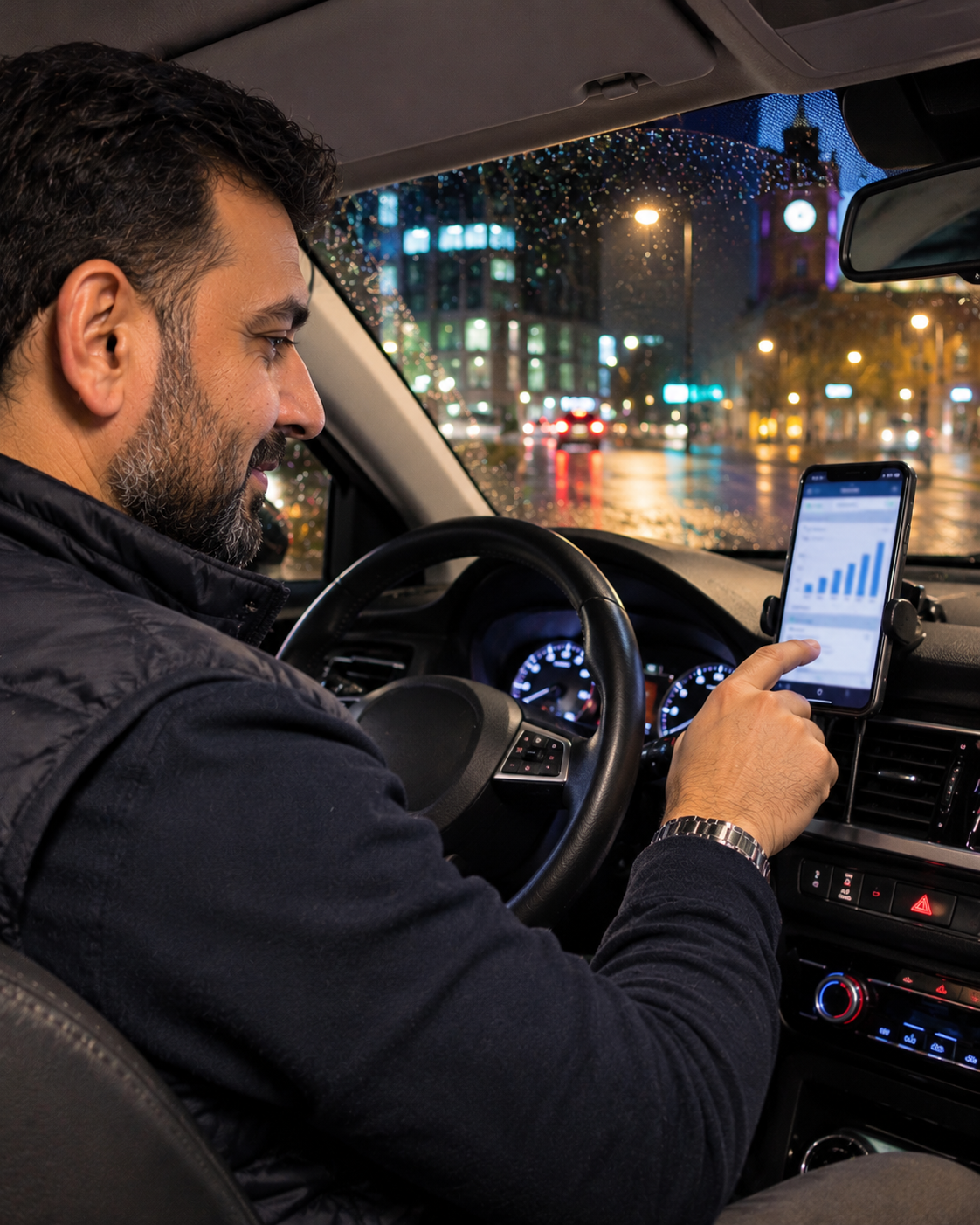
Drivers choose between two ways to claim their car. The flat mileage rate pays 45p a mile for the first 10,000 business miles and 25p a mile after that.
The other route claims a share of your real fuel, insurance, servicing and finance costs, plus capital allowances on the car itself. You remove the private use share before claiming.
Once you pick a method for a car, you keep it for as long as you drive that vehicle. We run both sums before your first return, so the choice suits a full-time mileage pattern.
New electric cars bought for the business can qualify for a 100% first-year allowance until April 2027. That allowance often makes actual costs the better route for an electric car.

Costs Drivers Can Claim
Every allowable cost cuts your tax bill by at least 26 pence in the pound once you combine 20% Income Tax with 6% Class 4 National Insurance. Drivers who skip small claims often overpay by hundreds each year.
These are the costs we claim for drivers most often.
- The service fee the app takes from each fare
- Private hire licence and vehicle licence fees
- Hire and reward insurance
- Phone contract and mounts used for driving
- Car valeting and cleaning
- Parking and tolls during jobs
- Medical and criminal record checks for your licence
Parking fines and speeding tickets never count. Drivers who use the mileage rate also cannot claim fuel, insurance or repairs separately.


Making Tax Digital and Your Fares
Making Tax Digital for Income Tax counts gross fares before the app’s service fee comes off. A full-time driver can pass the threshold even when the money paid out looks far lower.
Drivers with gross income above £50,000 joined in April 2026. Anyone above £30,000 in 2025/26 joins on 6 April 2027, and that covers many drivers who work five or six days a week.
Joining means digital records and four quarterly updates a year. Our business tax advice team sets up the software and files each update for you.
Tax Rules for Different Driving Setups
The way you drive changes how your income and costs are taxed. We match your setup to the right rules before we prepare your return.
Driving Alongside a Job
First, we look at part-time drivers. Your PAYE wages use up your personal allowance, so every pound of driving profit is taxed from the first mile.
Food Delivery Couriers
Next, we check delivery work. Couriers on bikes claim 20p a mile and motorcyclists claim 24p, and both report their earnings on the same return.
Renting Your Car Weekly
Then, we review rented cars. Your weekly rental counts as an allowable cost, and we claim it in place of capital allowances on a car you don’t own.
Driving Electric
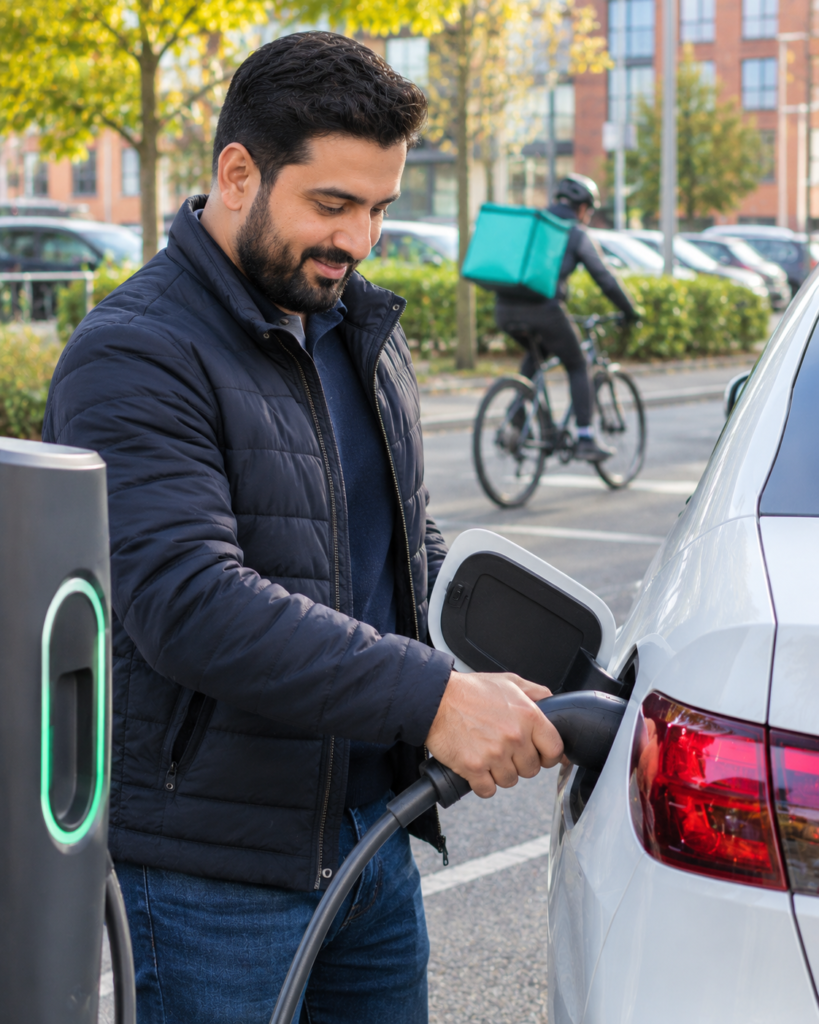
Finally, we look at electric cars. Home charging costs for business miles count, and we split your electricity bill so you claim only the driving share.
Supporting Drivers Across the UK
Our office is at St James Tower, 7 Charlotte Street, Manchester M1 4DZ. Drivers who work the Manchester Airport and city centre ranks can call in between jobs.
Most drivers work with us remotely, though. We file returns for drivers in Manchester, Leeds, Liverpool, Birmingham, London and Bristol, and we only need your app’s tax summary and your records. See our Self Assessment tax return Manchester service for fixed fee details.
Our team handles the following for drivers.
- First-year registration as self-employed
- Annual Self Assessment returns
- Mileage and capital allowance claims
- Payments on account reductions
- Making Tax Digital quarterly updates
- Late returns for past tax years
- HMRC letters about app earnings data

Let’s Sort Your Driver Tax Return
Call Tax Consultant UK on 0330 133 7827 or email hello@taxconsultant.co.uk. You can also send us a message. We review your app statement, confirm a fixed fee and tell you your filing date before work begins.
Driver Tax Return FAQs
Does the app take tax off my earnings?
No. You receive your fares in full and pay Income Tax and National Insurance through your own Self Assessment return.
Can HMRC see what I earn as a driver?
Yes. Ride-hailing apps report each driver’s earnings to HMRC every January for the previous calendar year.
Can I claim the app’s service fee?
Yes. You report gross fares and then deduct the service fee as a business cost.
Can I claim both mileage and fuel?
No. The mileage rate already covers fuel, insurance and repairs, so you claim one method only.
When do I need to register as self-employed?
Register by 5 October after the end of the tax year in which you started driving.
I haven’t filed for past years. Can you help?
Yes. We prepare the missing returns and help you tell HMRC before it contacts you, which usually keeps penalties lower.