
An inheritance tax advisor UK families rely on works out how much Inheritance Tax your estate faces today and builds a legal plan to reduce it. The tax is charged at 40% on everything above your tax-free allowances, so even a modest family home and savings can create a bill worth tens of thousands of pounds.
Planning early gives you more options. Many reliefs only work if you survive a gift by seven years, and some only apply when assets are held in the right way for two years or more. This guide explains how the tax works, what has changed recently, and how professional advice turns those rules into real savings for the people you leave behind.

What Does an Inheritance Tax Advisor Do?
An inheritance tax specialist starts by valuing your estate and calculating the bill your family would pay if you died today. That figure becomes the baseline for every recommendation.
The work usually follows four stages.
Stage One Is a Full Estate Review
Your advisor lists your property, savings, investments, pensions, business interests and personal belongings. Debts such as mortgages are deducted. Gifts made in the last seven years are added back, because HMRC counts them when working out the bill.
Stage Two Is Identifying Allowances and Reliefs
The review shows which allowances you already qualify for and which you are missing. Many people lose the residence nil rate band simply because their will leaves the home in a way that does not qualify.
Stage Three Is the Planning Report
This sets out practical steps, such as a gifting programme, a trust, a change to your will, or restructuring business assets. Each option comes with its tax cost, its risks and the effect on your own income.
Stage Four Is Putting the Plan in Place
Advice only saves tax once it is acted on. Your advisor works with your solicitor on wills and trust deeds, keeps gift records in order, and reviews the plan when the law or your circumstances change.
How Inheritance Tax Works in the UK
Inheritance Tax applies to the estate of someone who has died, and to some gifts made during their lifetime. The standard rate is 40% on the value above the available allowances.
You can read HMRC’s own summary on the GOV.UK Inheritance Tax page.
The Main Allowances
| Allowance | Amount | Who Gets It |
|---|---|---|
| Nil rate band | £325,000 | Every individual |
| Residence nil rate band | Up to £175,000 | Those leaving a home to direct descendants |
| Combined for a single person | Up to £500,000 | With both bands in full |
| Combined for a married couple or civil partners | Up to £1,000,000 | When unused bands transfer to the survivor |
Both bands are frozen until April 2031. As house prices and savings rise, more estates cross the threshold each year without anyone getting richer in real terms.

The Residence Nil Rate Band Has Strict Conditions
This extra allowance only applies when a home you lived in passes to children, grandchildren, stepchildren or their spouses. It reduces by £1 for every £2 your estate exceeds £2 million, so larger estates can lose it completely. GOV.UK explains the full conditions in its guide to the residence nil rate band.
Spouses and Civil Partners
Everything you leave to a husband, wife or civil partner is free of Inheritance Tax. Any allowance you do not use passes to them, which is how a couple can protect up to £1 million. Unmarried partners do not get this exemption, which often surprises cohabiting couples.
Leaving Money to Charity
Gifts to UK charities are exempt. If you leave at least 10% of your net estate to charity, the rate on the rest of your taxable estate falls from 40% to 36%.
Recent Changes You Need to Plan Around
Several rule changes now affect estates that were safely outside the tax a few years ago. A good advisor builds these into your plan straight away.
Business and Agricultural Property Relief Is Now Capped
Since 6 April 2026, 100% relief on qualifying business and farm assets applies to the first £2.5 million only. Value above that receives 50% relief, which works out at an effective tax rate of 20%.
Any unused part of the £2.5 million allowance can pass to a surviving spouse or civil partner. Shares on markets such as AIM now receive 50% relief and do not use up the allowance. The government has set out worked examples on its agricultural property relief changes page.
Our team handles these cases through our trading and agricultural assets service.
Pensions Join the Estate From April 2027
From 6 April 2027, most unused pension funds and death benefits will count towards the value of an estate. For decades, a pension was one of the simplest ways to pass on wealth free of Inheritance Tax. That treatment is ending, so many people now need to rethink how they draw income in retirement. Our pension planning advice covers this change in detail.
Personal Representatives Carry More Responsibility
Executors will need to report pension values to HMRC and pay any tax due on them. This adds work and risk at an already difficult time, and clear records made during your lifetime make their job far easier.
Lifetime Gifts and the Seven Year Rule

Giving assets away during your life is one of the most effective ways to reduce Inheritance Tax. The rules decide whether a gift leaves your estate straight away, after seven years, or never. GOV.UK covers these in its guide to Inheritance Tax on gifts.
Gifts That Are Exempt Immediately
Some gifts fall outside your estate the day you make them.
- £3,000 each tax year, with one year’s unused amount carried forward
- Small gifts of up to £250 per person
- Wedding gifts of £5,000 to a child, £2,500 to a grandchild, or £1,000 to anyone else
- Regular gifts made from surplus income that do not affect your standard of living
The surplus income exemption has no upper limit. It is also the one most often lost through poor records, because HMRC needs to see a regular pattern and evidence that your lifestyle was unaffected.
Larger Gifts and Taper Relief
A larger gift to a person is a potentially exempt transfer. It leaves your estate completely once you survive seven years. If you die sooner and your gifts exceed the nil rate band, the tax on the excess reduces on a sliding scale.
| Years Between Gift and Death | Tax Rate on the Gift |
|---|---|
| Less than 3 | 40% |
| 3 to 4 | 32% |
| 4 to 5 | 24% |
| 5 to 6 | 16% |
| 6 to 7 | 8% |
| 7 or more | 0% |
The Gift With Reservation Trap
Giving away your house but carrying on living in it rent free does not work. HMRC treats the home as still yours. An advisor checks every planned gift against these rules before you make it.
Trusts, Family Companies and Other Planning Tools
Trusts let you move assets out of your estate while keeping some control over who benefits and when. Most lifetime trusts carry an immediate 20% charge on value above your nil rate band, plus charges of up to 6% every ten years. Getting the structure right matters, so our trusts and inheritance tax service reviews the costs before anything is set up.
A family investment company suits families with larger investment portfolios. Parents keep control through voting shares, while the future growth builds up in shares held by children.
Life insurance written into trust is another option. A whole of life policy can pay the expected tax bill so your family does not have to sell the home to cover it.
People with homes or assets abroad face extra questions about which country’s tax applies. Our residence and domicile advice covers those cases.
A Worked Example With and Without Advice
These figures are simplified to show how planning changes the result.
Margaret is single and owns a £450,000 home plus £450,000 of savings and investments. Her estate is worth £900,000 and she plans to leave everything to her two children.
Without Any Planning
| Item | Amount |
|---|---|
| Estate value | £900,000 |
| Nil rate band | £325,000 |
| Residence nil rate band | £175,000 |
| Taxable amount | £400,000 |
| Tax at 40% | £160,000 |
With a Ten Year Plan
Margaret’s pension income covers her lifestyle comfortably. She gives £12,000 a year from surplus income for ten years, which removes £120,000 from her estate with no seven year wait.
She also gives her daughter £40,000 towards a first home and survives the gift by more than seven years.
| Item | Amount |
|---|---|
| Estate value after gifts | £740,000 |
| Allowances | £500,000 |
| Taxable amount | £240,000 |
| Tax at 40% | £96,000 |
The plan saves her children £64,000. Real cases often go further with trusts, charitable gifts or business reliefs, and every plan has to fit the person’s own income needs first.
What Executors Must Do After a Death
Executors handle the tax using money from the estate. The deadlines are fixed, and HMRC charges interest on late payment.
Key Deadlines
Inheritance Tax is due by the end of the sixth month after the month of death. A death in March means payment by the end of September.
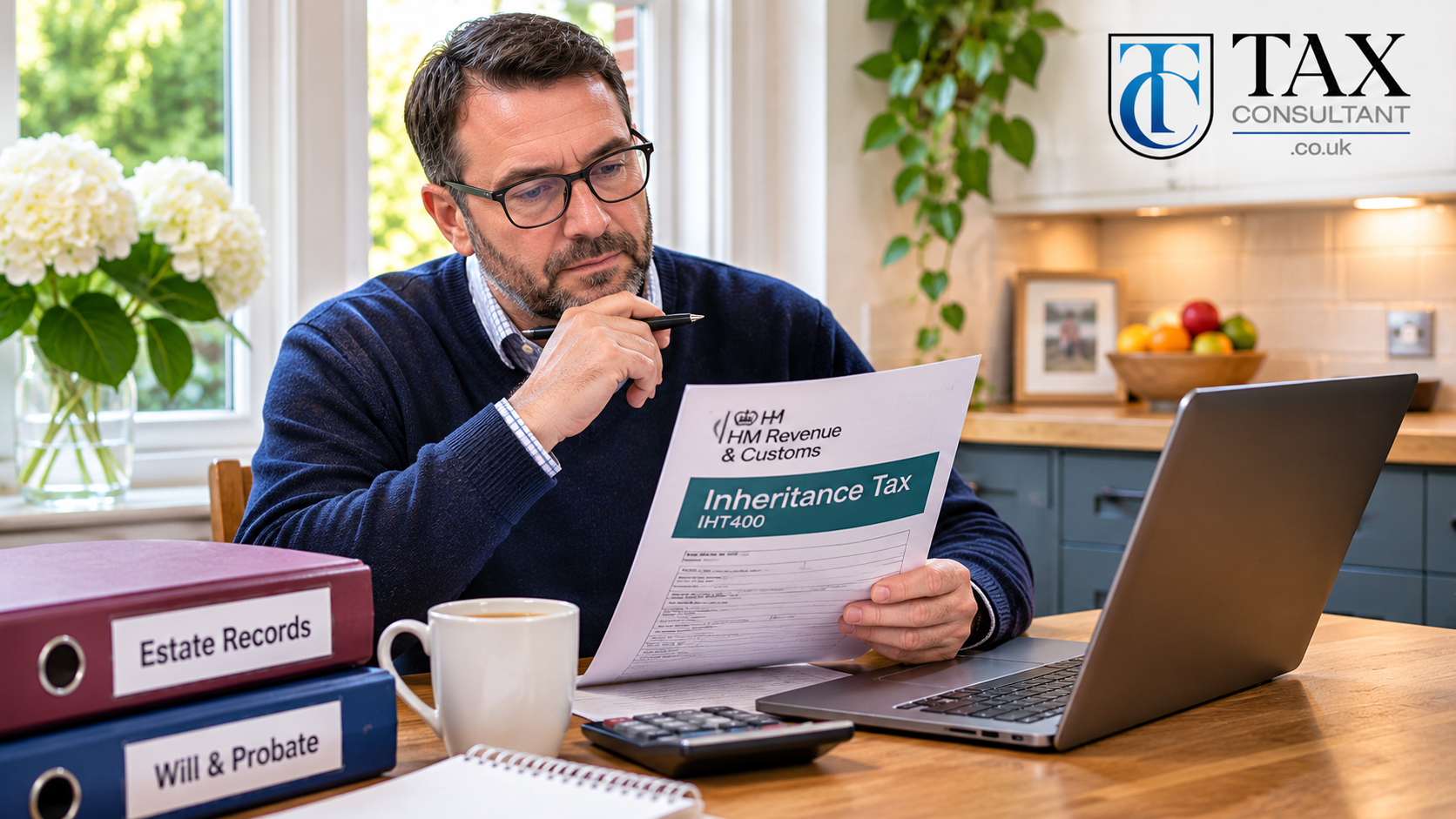
The full account, usually form IHT400, must reach HMRC within 12 months. In most cases some tax must be paid before probate is granted, which can leave families searching for cash before they can access the estate.
Ways to Pay
Executors need a payment reference at least three weeks before paying. Banks can release money directly from the deceased person’s accounts through the Direct Payment Scheme. Tax on property and qualifying business assets can be spread over ten yearly instalments. GOV.UK explains each method on its paying Inheritance Tax page.
Income Tax and Capital Gains Tax Still Apply
Executors must also settle the deceased person’s income tax up to the date of death. Beneficiaries who inherit a rental property start paying tax on that income, and selling inherited assets can trigger Capital Gains Tax. For anyone in Greater Manchester, our team can file a self assessment tax return Manchester clients need after inheriting. Sales of inherited shares or property are covered by our Capital Gains Tax advisor guide.
Our deceased estates service supports executors through every stage.
A Two Year Window to Change Things
Beneficiaries can redirect what they inherit within two years of the death using a deed of variation. Done correctly, the new arrangement is treated as if it were in the original will, which can reduce tax for the whole family.
When Should You Speak to an Advisor?
Expert IHT advice pays off most when you act early. These situations are clear signs to book a review.
- Your estate, including your home, is worth more than £325,000
- You own a business, farm, buy to let property or company shares
- You have significant pension savings you may not spend
- You want to help children or grandchildren financially now
- You live with a partner but are not married
- You have assets overseas or have lived abroad
What to Bring to Your First Meeting
Bring recent valuations of your home and other property, statements for bank accounts, investments and pensions, and details of any loans or mortgages. A copy of your current will and any trust documents helps too. A list of gifts you have made in the last seven years, with dates and amounts, is often the most useful document of all.
Inheritance Tax planning is one part of our wider tax planning service, so your advisor can also check how each step affects your income tax and Capital Gains Tax.
Frequently Asked Questions
How much does inheritance tax advice cost?
Fees depend on the size and complexity of the estate. A straightforward review costs far less than a plan involving trusts or business assets. Ask for a fixed fee quote before work begins.
Can I avoid Inheritance Tax completely?
Many estates can reduce the bill to zero through spouse exemptions, allowances and early gifting. Larger estates can usually reduce the tax significantly, though rarely remove it entirely without long term planning.
Do beneficiaries pay Inheritance Tax themselves?
The estate pays the tax before anything is passed on. The exception is a gift made within seven years of death, where the person who received it may have to pay.
Is my pension subject to Inheritance Tax?
From 6 April 2027, most unused pension funds and death benefits count as part of your estate. Pensions you plan to leave untouched now need reviewing.
Can I give my house to my children to avoid Inheritance Tax?
You can, but if you keep living in it without paying full market rent, HMRC still treats it as yours. Gifting a home can also create a Capital Gains Tax bill for your children when they later sell it.
What happens if Inheritance Tax is paid late?
HMRC charges interest from the end of the sixth month after the month of death. Penalties can also apply if the account is filed late.
When should I start planning?
Start as soon as your estate approaches the £325,000 threshold. The seven year rule means planning that starts at 65 has far more scope than planning that starts at 80.
Speak to Our Inheritance Tax Team
Tax Consultant helps individuals, families and business owners across the UK, with offices in London, Manchester, Leeds and Bristol. We calculate your current exposure, explain your options in plain English and help you put a plan in place.
Call us on 0330 133 7827, email hello@taxconsultant.co.uk, or contact us to book your review.