
A tax advisor for directors helps you decide how to take money out of your limited company, how much tax you pay on it, and what HMRC expects from you each year. Good advice covers your salary, dividends, pension, director’s loan account and the future sale of your business in one joined-up plan.
Running a company gives you choices that employees never get. You pick your salary level and time your dividends. You also decide whether profit stays in the business or goes into a pension. Each choice carries a different tax cost.
This guide explains how those choices work for the 2026/27 tax year, where directors commonly lose money, and when specialist help pays for itself.

What Does a Tax Advisor for Directors Do?
A company director usually wears two hats. You are an officer of the company, and you are often a shareholder too. Each role is taxed differently, so advice has to look at both sides at the same time.
Typical work for an owner-managed company includes:
- Setting a tax-efficient split between salary and dividends
- Planning employer pension contributions
- Managing the director’s loan account to avoid a Section 455 charge
- Reviewing benefits in kind and P11D reporting
- Preparing for a sale or exit with Business Asset Disposal Relief
- Handling HMRC letters, enquiries and compliance checks
The aim is simple. You keep more of what the company earns, and every decision stands up if HMRC asks questions. Our tax planning service builds this into a plan that runs across the whole year.
Why Directors Need Different Tax Advice From Employees
An employee pays tax through PAYE and rarely thinks about it again. A director faces a far more mixed picture.
Dividends sit outside PAYE, so they often create a personal tax bill. The company also pays its own Corporation Tax on profits. In addition, company money legally belongs to the company, not to you.
That last point catches many new directors out. Your limited company is a separate legal person. Moving money from the business account to your personal account always has a tax label attached. It counts as salary, a dividend, a loan, an expense repayment or a pension contribution.
GOV.UK sets out the legal duties that come with the role in its guide to running a limited company. Tax decisions sit inside those duties, so getting them right protects you personally as well as the business.
How Should a Director Pay Themselves in 2026/27?
Most directors use a mix of a modest salary and dividends. The right balance depends on company profits, other income you have and whether the company can claim Employment Allowance.
Director Salary
Salary is a deductible cost for the company, so it reduces Corporation Tax. It also builds your State Pension record once it passes the Lower Earnings Limit of £6,708 a year.
For 2026/27, the key thresholds are:
- Personal Allowance of £12,570, so no income tax below this level
- Employee National Insurance starts above £12,570
- Employer National Insurance runs at 15% above £5,000 a year
- Employment Allowance offers up to £10,500 off employer National Insurance
There is one important catch. A company cannot claim Employment Allowance when the director is the only employee paid above the secondary threshold. Many one-person companies fall into this group, which changes the ideal salary level.
You can check every figure on the official rates and thresholds for employers page.
Dividends
Dividends come out of profit after Corporation Tax. No National Insurance applies to them, which is why they remain popular with directors.
The rates rose from 6 April 2026. The first £500 of dividends each year is tax-free under the dividend allowance. After that, the rate depends on your income tax band.
| Tax band | Dividend tax rate 2026/27 |
|---|---|
| Dividend allowance (first £500) | 0% |
| Basic rate | 10.75% |
| Higher rate | 35.75% |
| Additional rate | 39.35% |
Full details are on the GOV.UK tax on dividends page.
A company can only pay dividends from available profits. Each payment also needs a board minute and a dividend voucher. Skipping this paperwork is one of the first things HMRC looks for in a compliance check.
Worked Example: Salary and Dividends for a Sole Director
Here is a simple example for a one-director company that cannot claim Employment Allowance.
The company makes £60,000 profit before paying the director. The director takes a salary of £12,570 and dividends of £30,000. The director has no other income.
| Item | Amount |
|---|---|
| Employer National Insurance on salary (£7,570 × 15%) | £1,135.50 |
| Company profit after salary and employer NI | £46,294.50 |
| Corporation Tax at 19% | £8,795.96 |
| Profit left after Corporation Tax | £37,498.54 |
| Income tax on salary | £0 |
| Dividend tax (£29,500 × 10.75%) | £3,171.25 |
| Total tax across company and director | £13,102.71 |
The director receives £42,570 in total and keeps £39,398.75 after personal tax. The company still holds £7,498.54 of retained profit for future use.
Small changes move these numbers a lot. A different salary, a pension contribution or a second associated company can shift the result by hundreds or thousands of pounds. Your Corporation Tax rate also changes once profits pass £50,000, because marginal relief applies up to £250,000.
Pension Contributions: The Most Overlooked Tax Saving
Employer pension contributions are often the most efficient way to extract profit. The company pays straight into your pension, and the payment usually counts as a business expense.
That means no income tax, no employee National Insurance and no employer National Insurance on the contribution. The company also saves Corporation Tax on the amount paid.
The standard annual allowance is £60,000. Unused allowance from the previous three tax years can often be carried forward. High earners may face a tapered allowance, so their figures need checking first.
Our pensions advice helps directors decide how much to pay in, and when, without breaching the limits.
Director’s Loan Accounts and the Section 455 Charge
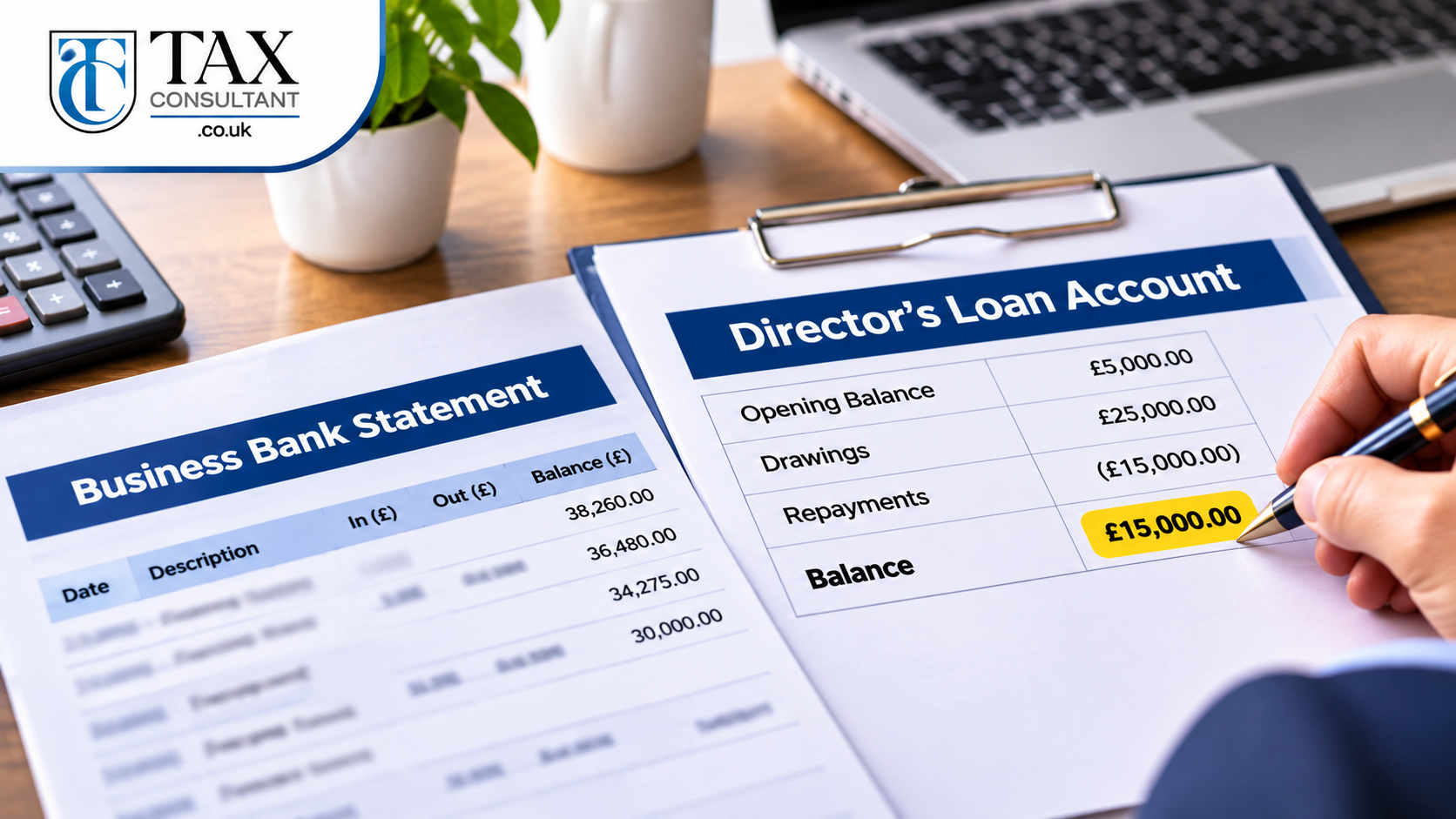
A director’s loan account records money you take from the company that is not salary, dividends or an expense repayment. When you owe the company money, the account is overdrawn.
If the loan is still unpaid nine months and one day after the company year end, the company pays a Section 455 charge. The rate matches the dividend upper rate on the date of the loan. It is 33.75% for loans made between 6 April 2022 and 5 April 2026, and 35.75% for loans made on or after 6 April 2026.
The charge is refundable once the loan is repaid. Still, it ties up company cash for a long time.
Loans above £10,000 bring a second issue. Unless you pay interest at HMRC’s official rate, the loan becomes a benefit in kind on your P11D. HMRC also has 30-day rules that block repaying a loan and then quickly borrowing the money again.
GOV.UK explains the rules in its directors’ loans guidance.
Benefits in Kind and P11D Reporting
Perks from your company may count as taxable benefits. Common examples include company cars, private medical cover and interest-free loans.
The company reports these on a P11D form by 6 July after the tax year ends. It also pays Class 1A National Insurance at 15% on the value of the benefit.
Some benefits carry little or no tax:
- One mobile phone contract in the company’s name
- Trivial benefits up to £50 each, capped at £300 a year for directors of close companies
- Electric company cars, which carry a much lower benefit rate than petrol or diesel cars
Our team handles P11D reporting and checks which benefits make sense before you commit to them.
Self Assessment Duties for Company Directors
Many directors must file a Self Assessment tax return each year. This is usually because dividends and other untaxed income sit outside PAYE.
The key dates are:
- Register for Self Assessment by 5 October after the tax year ends
- File your online return by 31 January
- Pay any balance due by 31 January
- Make a second payment on account by 31 July, if one applies
You can confirm your own position with HMRC’s tool to check if you need a tax return. If you have trouble signing in, our guide to the Self Assessment login HMRC process walks you through it.
Planning Your Exit With Business Asset Disposal Relief

Selling your shares one day usually triggers Capital Gains Tax. Business Asset Disposal Relief can reduce the rate on qualifying gains to 18% from 6 April 2026, up to a £1 million lifetime limit.
To qualify, you normally need to meet these conditions for at least two years before the sale:
- You hold at least 5% of the shares and voting rights
- You are an officer or employee of the company
- The company is a trading company
Cash and investments building up in a company can put trading status at risk. That is why exit planning works best years ahead of a sale. GOV.UK covers the full rules on Business Asset Disposal Relief.
We advise on Business Asset Disposal Relief claims and related exit routes. These include a company purchase of own shares and family investment companies for directors passing wealth to the next generation.
When HMRC Looks Closely at Directors
HMRC pays close attention to owner-managed companies. Directors control both the company and their own pay, so certain areas get extra scrutiny.
Common triggers include large overdrawn loan accounts, dividends paid without enough profit, and personal spending put through the business. Missing filing deadlines can also lead to enquiries.
In serious cases, HMRC can issue a personal liability notice. This can make a director personally responsible for certain company debts, such as National Insurance lost through deliberate failures.
If HMRC has already written to you, our HMRC investigation support can help you respond correctly. If you know something was missed in past years, a voluntary disclosure usually leads to lower penalties than waiting for HMRC to find it.
Common Tax Mistakes Directors Make
The same errors come up again and again with owner-managed companies.
Paying dividends without available profit. These dividends may be unlawful and can be treated as a loan or as salary.
Using the company account as a personal account. This creates an overdrawn loan account and possible Section 455 charges.
Ignoring pension contributions. Many directors pay more tax than needed simply because nobody ran the pension numbers.
Forgetting associated companies. Owning two or more companies divides the Corporation Tax limits between them.
Leaving planning until the year end. Most savings come from decisions made during the year, not after it.
Tax Advisor vs General Compliance Support
Compliance support records what already happened. Returns get filed after the year ends, based on decisions you have already made.
Tax advice works the other way round. It looks at the decision before you make it. That covers your salary level, a dividend, a car purchase, a pension payment or a share sale.
Tax Consultant focuses on tax advice and planning. We review your company and personal tax position together, flag risks early, and explain your options in plain English. You then make each decision knowing its full tax cost.
How to Choose the Right Tax Advisor for Directors
Look for these points before you appoint anyone:
- Proven experience with owner-managed limited companies
- Advice that covers company and personal tax together
- Experience dealing with HMRC enquiries and disputes
- Clear fees agreed before work starts
- Planning reviews before the company year end and before 5 April
The right tax advisor for directors acts before problems appear. A good plan pays for itself, often in the first year.
Speak to Our Team About Your Director Tax Position
Tax Consultant works with company directors across the UK, with offices in London, Manchester, Leeds and Bristol. We review your salary, dividends, pension, loan account and exit plans, then give you a clear plan for the tax year ahead.
Call us on 0330 133 7827, email hello@taxconsultant.co.uk, or contact our team to book a consultation.
Frequently Asked Questions
What is the most tax-efficient way for a director to pay themselves?
Most directors take a modest salary plus dividends. Many also add employer pension contributions. The best split depends on company profits, other income and whether the company can claim Employment Allowance.
What are the dividend tax rates for 2026/27?
After the £500 dividend allowance, dividends are taxed at 10.75% in the basic rate band. The rate is 35.75% in the higher rate band and 39.35% in the additional rate band.
Do company directors have to file a Self Assessment tax return?
Many directors do, usually because they receive dividends or other untaxed income. HMRC’s online checker confirms whether you need to file in a given year.
What happens if my director’s loan account is overdrawn?
If the loan is unpaid nine months and one day after the year end, the company pays a Section 455 charge. HMRC refunds the charge once you repay the loan.
Can my company pay into my pension?
Yes. Employer pension contributions are usually a deductible business expense. They also carry no income tax or National Insurance, within the annual allowance limits.
Is Business Asset Disposal Relief still available?
Yes. From 6 April 2026, qualifying gains are taxed at 18% up to a £1 million lifetime limit, provided you meet the conditions for two years before the sale.
When should a director speak to a tax advisor?
Speak to a tax advisor before major decisions. These include changing your pay, buying a company car, taking a large dividend or loan, bringing in a family shareholder, or planning a sale.
Can a tax advisor help if HMRC has opened an enquiry?
Yes. Early advice helps you answer HMRC accurately and on time. It also reduces the risk of penalties and keeps the enquiry focused on the real issues.
The figures in this article apply to the 2026/27 tax year (6 April 2026 to 5 April 2027). Tax rules change regularly, so take advice on your own circumstances before acting.