Self Assessment Leeds taxpayers need to get right comes round every year, and the deadlines arrive faster than most people expect. Whether you are self-employed, a landlord, a company director or simply have income HMRC does not tax automatically, filing your tax return correctly and on time saves you money and stress.
This guide explains who needs to file, the key deadlines each year, the documents to gather, and how to avoid HMRC penalties. If you would like help with your own return, contact our team for a consultation.
Who Needs to File a Self Assessment Tax Return?
Most employees pay their tax automatically through PAYE and do not need to file a return. However, you will usually need to complete a Self Assessment tax return if you:
- Are self-employed as a sole trader and earn more than £1,000 in trading income
- Are a partner in a business partnership
- Receive income from renting out property
- Have untaxed income, such as tips, commission or overseas income
- Have income over £100,000 or need to pay the High Income Child Benefit Charge
- Make a capital gain that needs to be reported
- Receive a notice from HMRC asking you to file a return
If you are unsure whether you need to file, speak to a tax advisor. Not filing when you should can lead to penalties and interest.
Self Assessment Leeds Deadlines Every Year
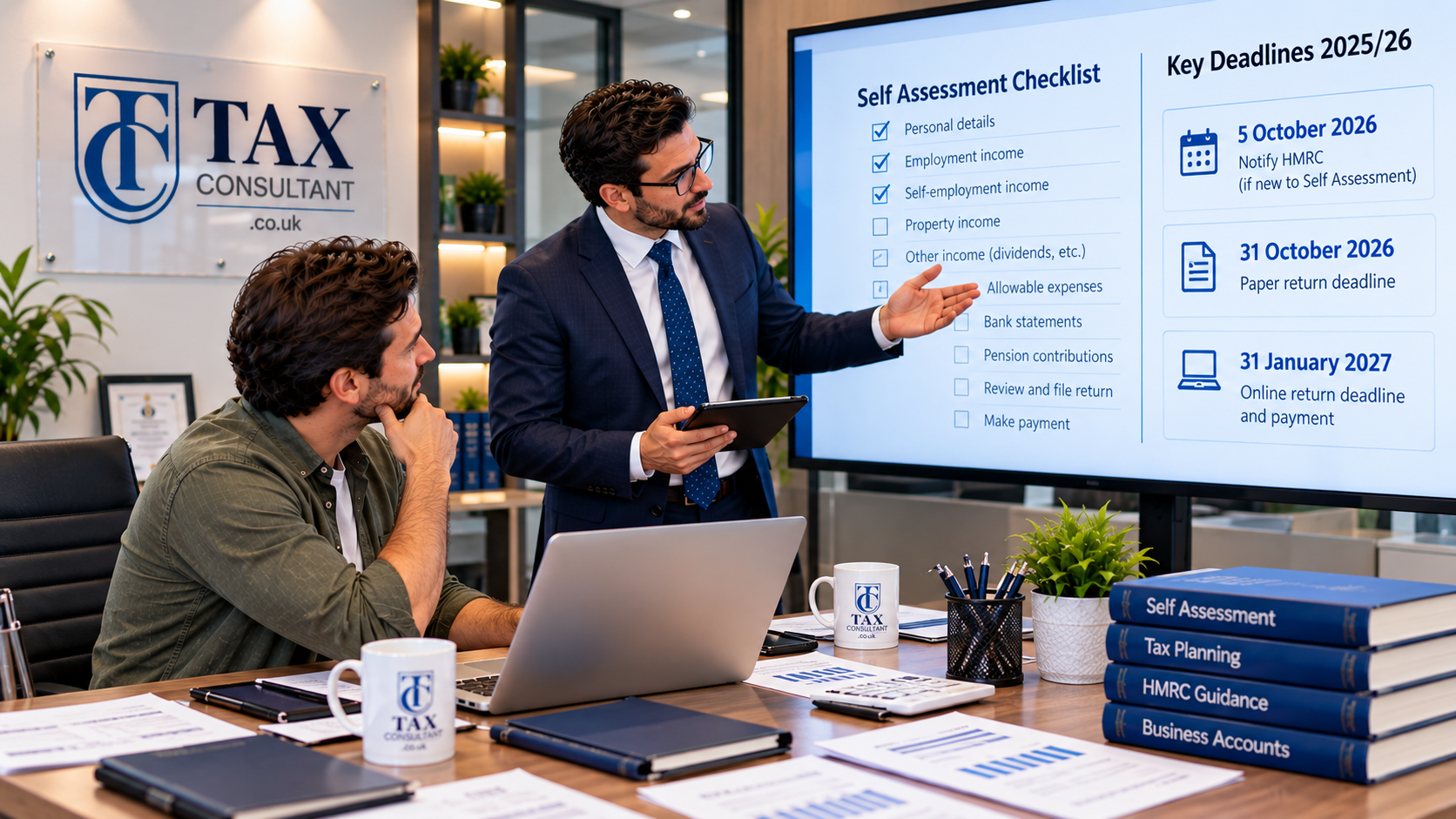
The UK tax year runs from 6 April to 5 April. The key Self Assessment deadlines follow the same pattern every year:
- 5 October after the tax year ends: register for Self Assessment if you are filing for the first time
- 31 October after the tax year ends: deadline for paper tax returns
- 30 December after the tax year ends: file online by this date if you want tax under £3,000 collected through your PAYE tax code
- 31 January after the tax year ends: deadline for online tax returns and for paying any tax owed, plus your first payment on account for the current year
- 31 July: deadline for your second payment on account
Missed the 5 October registration deadline? Register as soon as possible. You can still file and pay by 31 January to avoid late filing penalties, but registration can take several weeks, because HMRC posts your Unique Taxpayer Reference (UTR).
Your Self Assessment Document Checklist
Gathering your paperwork early makes filing faster and reduces the risk of mistakes. Depending on your circumstances, you may need:
If You Are Employed
- P60 from your employer
- P11D if you received benefits in kind, such as a company car
- P45 if you changed jobs during the year
If You Are Self-Employed
- Records of all business income
- Receipts for allowable expenses, such as equipment, travel, phone and office costs
- Business bank statements
- Mileage records if you use your vehicle for work
If You Are a Landlord
- Rental income statements from you or your letting agent
- Mortgage interest statements
- Receipts for repairs, maintenance, insurance and letting agent fees
Other Income and Reliefs
- Bank and building society interest statements
- Dividend statements
- Pension contribution records
- Gift Aid donation records
- Details of any assets you sold
HMRC Penalties for Late Self Assessment Returns
Missing the deadline is expensive. For late filing, HMRC charges:
- £100 immediately after the deadline, even if you owe no tax
- £10 per day after three months, for up to 90 days (a maximum of £900)
- The greater of £300 or 5% of the tax due after six months
- A further £300 or 5% of the tax due after twelve months
On top of these filing penalties, HMRC charges interest on tax paid late, and further penalties apply if tax remains unpaid. A return that is a few months late can easily cost well over £1,000 before you count the tax itself.
Payments on Account Explained
Payments on account are one of the most common causes of surprise tax bills.
If your Self Assessment bill is more than £1,000, and less than 80% of your tax was collected at source (for example through PAYE), HMRC usually asks you to make advance payments towards next year’s bill. Each payment is half of the previous year’s tax bill, and they are due on 31 January and 31 July.
In your first year of Self Assessment, this can mean paying almost 150% of a year’s tax in January. You pay the full bill for the year just ended plus the first advance payment for the current year. If your income has dropped, you may be able to apply to reduce your payments on account. A tax advisor can check whether this applies to you.
Self Assessment and Making Tax Digital
Self-employed people and landlords with qualifying income above the Making Tax Digital threshold must also keep digital records and send quarterly updates to HMRC, followed by a final declaration after the tax year ends. The threshold is being lowered in stages, so more sole traders and landlords will be brought in over time. If your income from self-employment or property is growing, check whether Making Tax Digital applies to you.
Common Self Assessment Mistakes Leeds Taxpayers Make
We work with individuals and businesses across Leeds and West Yorkshire, including Batley, and see the same errors every year:
- Missing the 5 October registration deadline as a newly self-employed person
- Forgetting to declare rental income or interest from savings
- Claiming expenses that are not allowable, or missing ones that are
- Not planning for payments on account and facing an unexpected January bill
- Entering figures incorrectly, which can trigger an HMRC enquiry
If HMRC opens a compliance review into your tax return, getting professional advice early makes a real difference. For more serious cases, our tax investigation service manages the process and deals with HMRC on your behalf. If you disagree with HMRC’s findings, our team also helps with tax disputes and appeals.
Why Use a Tax Advisor for Your Self Assessment in Leeds?
Many people file their own returns, but professional help often pays for itself. A tax advisor in Leeds can:
- Make sure you claim every allowable expense and relief
- File your return accurately and on time
- Plan ahead for payments on account
- Spot tax-saving opportunities for the year ahead
- Deal with HMRC on your behalf if questions arise
At Tax Consultant, we help sole traders, landlords, company directors and individuals with Self Assessment every year. You can meet our team at our Leeds office or work with us entirely online.
Self Assessment Leeds FAQs
When is the Self Assessment deadline?
The online filing and payment deadline is 31 January after the end of the tax year. Paper returns must be submitted by 31 October.
What happens if I miss the Self Assessment deadline?
You receive an automatic £100 penalty, even if you owe no tax. Further daily and percentage-based penalties apply the longer the return is late, and interest is charged on any unpaid tax.
I missed the 5 October registration deadline. What should I do?
Register as soon as possible. As long as you file and pay by 31 January, you can usually avoid late filing penalties.
Do I need to file a Self Assessment if I only have a small side income?
If your self-employed income is £1,000 or less, the trading allowance usually means you do not need to register. Above that amount, you normally need to file a return.
Can an accountant file my Self Assessment for me?
Yes. A tax advisor can act as your agent with HMRC, prepare and submit your return, and handle any correspondence about it.
Get Your Self Assessment Sorted Early
The earlier you start, the easier Self Assessment becomes. Whether you are filing for the first time or want someone to take the job off your hands, our team is ready to help.
Contact our team today to book a consultation with an experienced tax advisor in Leeds and get your return filed accurately and on time.